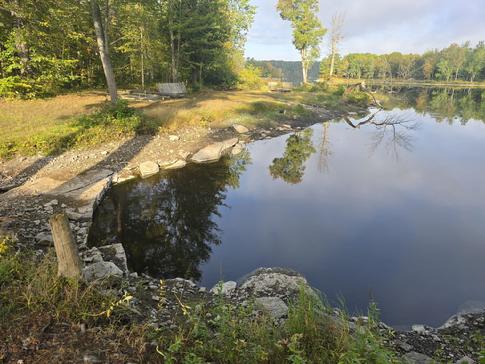
Unionid mussels are the native freshwater mussels of rivers and lakes, named for the group they belong to (the order Unionida). Their young begin life attached to the gills or fins of a host fish, so each species depends on the right fish as well as on flowing water and a stable riverbed. They have been studied for decades in open water, but almost nothing is known about unionid mussels that live in flooded caves. The Gervais/Three Island Cave System, whose permanently dark, fast-flowing passages connect directly to the Kìchì Sìbì (Ottawa River), holds a diverse community of them. Rather than a world apart, the cave looks like an underground part of the river itself: a rare chance to learn how a river ecosystem works below ground, in what may be one of the first detailed studies of its kind.
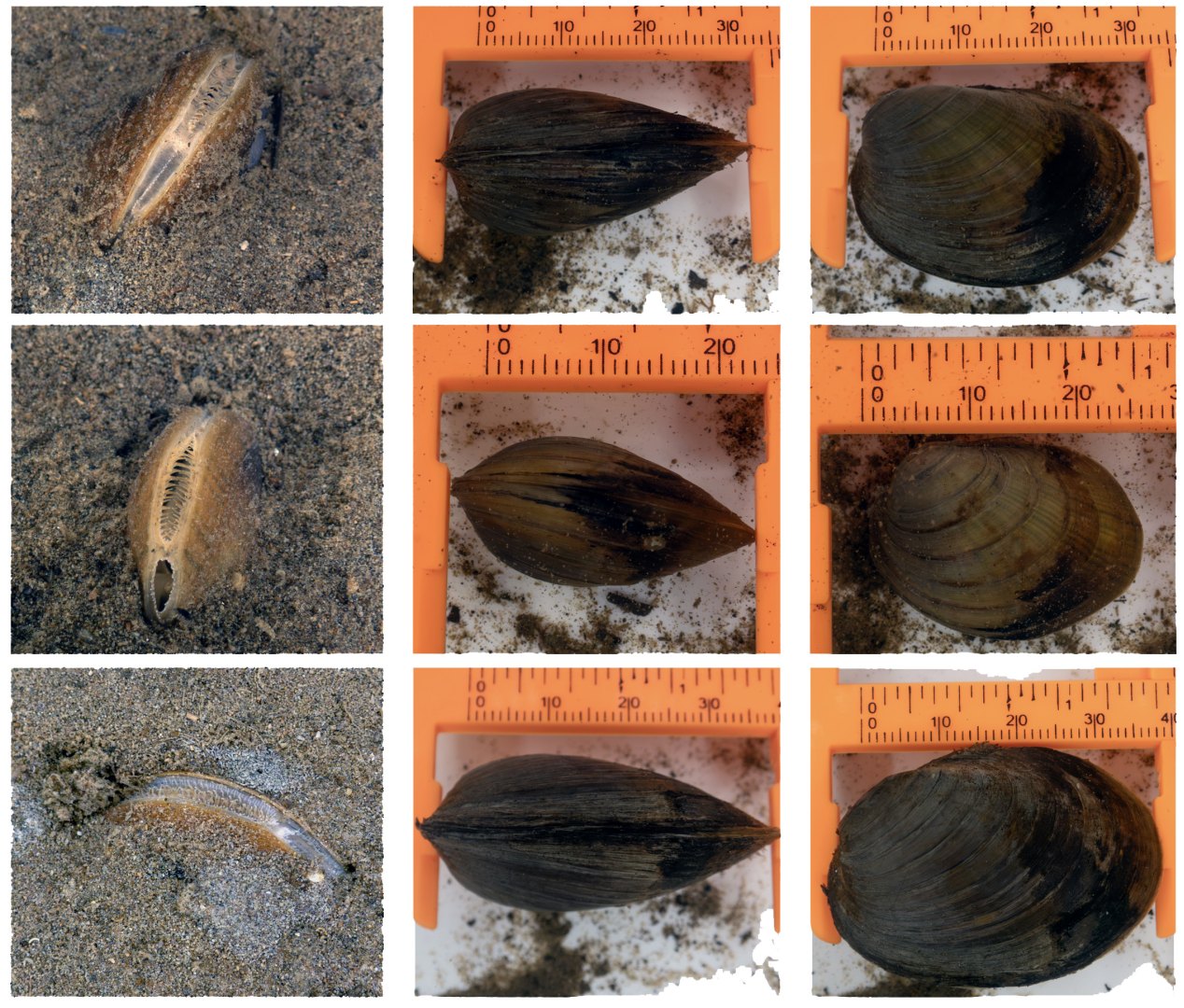
The unionid mussels in the Gervais/Three Island caves show no special adaptations for life underground: they are the same river species that live in the Kìchì Sìbì outside. Divers have recorded five so far: the eastern elliptio, the most common, the plain pocketbook, the black sandshell, the triangle floater (found so far only as empty shells) and the endangered hickorynut (Obovaria olivaria), whose young are thought to depend on the lake sturgeon. What makes them remarkable is where they are found: ordinary river species living in permanent darkness, often 10 to 100 to a square metre, in passages that are still connected to the river and fed by its flow.
The study counts and measures the mussels in the caves: how many species live there, which are most common, how densely they are packed, and what kind of cave floor each prefers. The team also tests the cave water for environmental DNA (eDNA), the traces of DNA that animals shed into the water around them. Early samples hold DNA from a wide variety of species, though some cannot yet be identified with certainty. Because DNA can also drift in from the river, eDNA shows which species are nearby, not how many live in the cave or whether they live there at all; that is what the counts are for.